
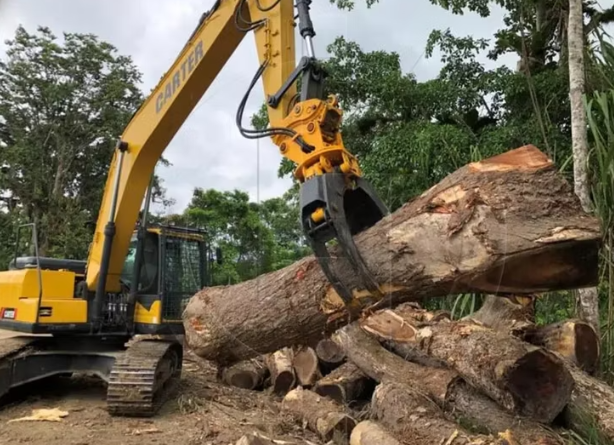
Most operators discover excavator grapple attachments after watching someone else use one. The reaction is always the same. Where has this been all my life? Experienced crews guard their grapples like prized possessions for good reason. Once you’ve worked with a proper grapple setup, going back to wrestling materials with a bucket feels primitive. These attachments don’t just make work easier. They fundamentally change what’s possible on a worksite in ways that aren’t immediately obvious until you’ve logged serious hours with one.
Grip Strength Matters More Than You’d Think
Here’s something nobody mentions in equipment specs. A grapple’s real value shows up when you’re dealing with materials that actively fight back. Try grabbing a twisted mess of rebar with a bucket. You’ll spend ages repositioning. A decent grapple locks onto it in one go. The hydraulic pressure creates a grip that actually tightens as you lift. This sounds simple until you’re working with waterlogged timber or frost-covered scrap metal. That pressure distribution prevents the crushing and splitting you get when trying to clamp irregular shapes between bucket teeth.
The Rotation Factor Changes Everything
Fixed grapples work fine until you need to place something precisely. Rotating models let you adjust material orientation without repositioning your entire machine. This becomes a game-changer when you’re working in tight spaces or around overhead obstacles. Watch an operator using a rotation grapple in a crowded demolition site. You’ll see them place beams through window openings and thread materials around columns without backing up once. That capability alone can mean the difference between finishing quickly or dragging the job out when access is limited.
Tine Geometry Isn’t Just Marketing Talk
The curve and spacing of grapple tines dramatically affects what you can actually grab. Forestry grapples have those deep curves because logs roll. You need geometry that cups them naturally. Excavator grapple attachments designed for demolition work use straighter, more aggressive tines. These punch into material piles and lock debris together through friction rather than cradling. Using the wrong tine design doesn’t just make work harder. It makes some tasks genuinely impossible. Try picking up a load of tree branches with straight demolition tines. Half your load will slide out before you’ve finished rotating.
Hydraulic Flow Requirements Nobody Explains
Here’s where operators run into unexpected problems. Not all excavators push enough hydraulic flow to run certain grapples effectively. You might bolt on a rotating grapple only to discover it moves like it’s underwater. Your machine’s auxiliary circuit can’t supply adequate pressure. Bigger grapples need serious flow rates. If your excavator wasn’t spec’d with high-flow auxiliary hydraulics, you’re facing limited options. Either stick with smaller attachments or face an expensive hydraulic upgrade. This mismatch catches people constantly because hire shops rarely mention flow requirements until you’re filling out paperwork.
Weight Distribution Nobody Calculates
Adding a heavy grapple to your stick end shifts your excavator’s centre of gravity. This affects stability and lifting capacity in ways people underestimate. A machine rated for certain lift weights with a standard bucket might struggle with the same load once you’ve added a grapple. The grapple itself adds considerable weight. Smart operators actually test their stability limits with the new attachment before attempting full-capacity lifts. This matters especially when working on slopes or uneven ground. The physics are real. That extended reach with added weight can tip a machine that’s perfectly stable with factory attachments.
Pin Compatibility Headaches
Quick couplers have standardised many things. But excavator grapple attachments still come in enough pin configurations to create genuine compatibility nightmares. European, Australian, and American pin standards differ. Even within regions, manufacturers use proprietary spacing. You can’t assume a grapple listed for your excavator size will actually bolt up without adaptors or pin modifications. Experienced operators keep detailed measurements of their coupler specifications. They verify compatibility before anything ships. Discovering a mismatch on delivery day brings projects to expensive halts.
Conclusion
Excavator grapple attachments deliver their real value in the details that equipment brochures skip over. The hydraulic nuances matter. The geometry that actually works in the field matters. The operational realities that separate effective tools from expensive frustrations matter most. Understanding these practical considerations before committing to an attachment saves time and money. It also saves the headaches that come from mismatched equipment. The right grapple setup genuinely transforms what your excavator can accomplish. But only when you’ve matched the attachment properly to both your machine’s capabilities and your actual working conditions.